

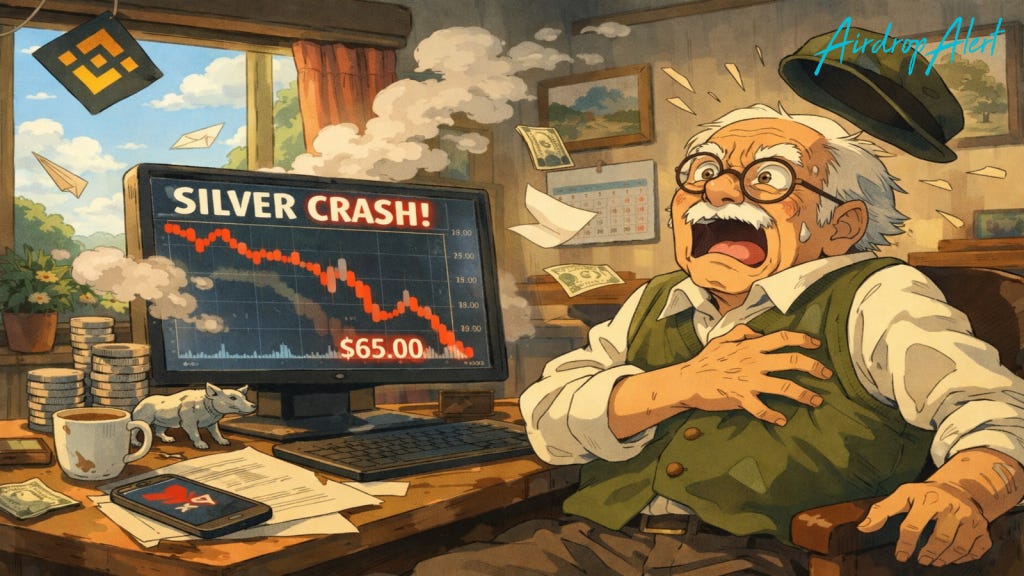
Why is this so very important?
Precious metals are an historic hedge against what people see as bad government practices. Most especially bad monetary and spending practices.
Governments all over the planet are currently engaged in many pronounced bad practices. None more so than the United States.
The US went off the gold standard for its money in 1971. Since that horrendously bad practice? The dollar has lost 87.5% of its value.
Since the dollar is no longer worth gold - or the paper on which it is printed? We the Little People purchase gold and other precious metals to hedge against the devaluation.
We are forced to put our trust in the metals markets - when we no longer trust the dollar.
But what if the metals markets are rigged too? Let’s take a look, shall we?
A key reason metals have value? Scarcity. Which limits its tradability.
So there exist “paper” metal purchases. You can purchase “metals” via investment vehicles like Exchange-Traded Funds (ETFs). Which track the performance of metals - and roughly mirror their values.
Understanding the difference between real silver and paper silver? Is crucial to understanding what happened on Friday, February 2nd.
February 2nd was a BAD day for silver (and other metals - which were caught in the silver vortex).
Paper silver prices dropped 20%. Real silver dropped 18%. $2.5 trillion wiped out. In a day. Black Friday indeed.
This precipitous drop followed months of steady - although volatile - gains. So the mainstream speculation was: This very bad day was a massive course correction. Combined with the naming of an allegedly hawkish next Federal Reserve Chair - Kevin Warsh. With a chaser of people selling to pocket profits.
The course correction explanation certainly rings hollow. No matter how hawkish Warsh proves to be? He isn’t reversing the dollar’s inexorable slide downward to near-zero value.
There is too much US government debt - and continued deficit spending. Government’s bad practices - remain government’s bad practices.
So why the “course correction” - when no one else has course corrected?
Enter JP Morgan. And its history of bad practices.
JP Morgan has in the past been found guilty of manipulating the metals markets. Back in 2020….
JPMorgan Chase & Co. Agrees To Pay $920 Million in Connection with Schemes to Defraud Precious Metals and U.S. Treasuries Markets:
“JPMorgan Chase & Co. (JPMorgan)…has entered into a resolution with the Department of Justice to resolve criminal charges related to two distinct schemes to defraud: the first involving tens of thousands of episodes of unlawful trading in the markets for precious metals futures contracts….”
This fraud took place over years - 2008-2016. At least two JP Morgan traders - their former Head of Global Precious Metals Business and Head Gold Trader - went to prison.
JP Morgan’s CEO throughout that fiasco - was Jamie Dimon.
JP Morgan’s CEO today - is Jamie Dimon.
Enter February 2nd….
How the Crash Worked - Step by Step:
“1. Silver price was pumping, reaching $120. Many traders went long using leverage, expecting even higher prices.
“2. JPMorgan opens shorts (short sells) at the top.
“3. Price starts falling rapidly. Exchanges increase margin requirements, demanding more cash from traders.
“4. Most traders can’t meet the new margin. Their positions are forcefully liquidated.
“5. As prices crash, JPMorgan buys back its short positions, locking in massive gains.
“6. Meanwhile, COMEX delivery data shows JPMorgan taking delivery of physical silver at depressed prices.
“According to COMEX, JPMorgan issued 633 silver contracts during the crash, placing it on the short side of a leveraged bloodbath.
“Open at $120 → Close at $78 = pure profit, while retail gets wiped out.”
COMEX, you ask?:
“Commodity Exchange, Inc…the primary futures and options market for trading metals like gold, silver, and copper, serving as a global benchmark for metal prices.”
In case it remains unclear what it looks like happened…:
“JPMorgan is one of the largest bullion banks active in this market and one of the largest participants on COMEX.
“According to COMEX data, JPMorgan is also one of the largest holders of registered and eligible physical silver, giving it influence on both the paper side and the physical side of the market at the same time….
“Before the crash, silver was pumping very fast. Many traders were long silver using borrowed money. When prices started falling, those traders did not choose to sell. They were forced to sell because exchanges demanded more margin.
“At the same time, exchanges raised margin requirements sharply. This meant traders suddenly needed much more cash to keep their positions open. Most could not. Their positions were closed automatically.
“This created forced selling. Now here is where JPMorgan benefits.
“When prices are collapsing and others are forced to sell, JPMorgan can do three things at once:
“FIRST, it can buy back silver futures at much lower prices than where it sold earlier. That locks in profit on paper.
“SECOND, it can take delivery of physical silver through the futures market while prices are depressed. COMEX delivery reports during this period show large banks, including JPMorgan, actively stopping contracts and taking delivery while prices were under pressure.
“THIRD, because JPMorgan has a massive balance sheet, margin hikes do not force it to sell. Margin hikes actually remove weaker players and leave JPMorgan with less competition….
“COMEX delivery data shows JPMorgan issued 633 Feb silver contracts right during this crash.
“Issued means JPMorgan was on the short side of those contracts. The claim is simple: JPMorgan opened shorts near the $120 top and closed them near $78 during delivery.”
So just about everyone had a very bad day. Except JP Morgan.
A bank so huge it appears it was able to play both sides - paper silver and real silver - against the middle.
And make many, many millions in the process. At the exorbitant expense of all the rest of us.
Would JP Morgan do such a thing? Well, they’ve already been found guilty of having done such a thing.
So it’s not a titanic leap to wonder if past is prologue.
The reason the Big Banks are “Too Big to Fail?”
Is because they have too much money to do ANYTHING it takes to succeed.